

Table of Contents
- What Makes Creatine 'Clean' and Why It Matters
- Third-Party Tested Creatine Monohydrate: The Gold Standard
- Creatine Monohydrate vs Creatine HCL: Which Delivers Better Results
- How to Take Creatine for Strength: Dosage and Timing
- Clean Creatine Features: What to Look For
- Isaac Temple Nutrition's Creatine Options for Daily Strength
- Conclusion: Building Strength With Purpose
- Frequently Asked Questions
Last Updated: September 30, 2026
What Makes Creatine 'Clean' and Why It Matters
When we talk about the best clean creatine for daily strength, we're talking about a supplement stripped of unnecessary additives, heavy metals, and artificial ingredients. Clean creatine means third-party tested, transparently sourced, and manufactured to pharmaceutical-grade standards. It's the difference between a product that delivers what the label promises and one that leaves you guessing what you're actually putting in your body.
The fitness industry is flooded with creatine products, but not all are created equal. Many contain fillers, artificial sweeteners, or trace contaminants that accumulate over time with daily use. For athletes committed to honoring their bodies as temples, this matters profoundly. You wouldn't build a house on a compromised foundation, and you shouldn't build strength on a compromised supplement.
At IsaacTempleNutrition, we understand that clean supplementation isn't just about performance, it's about integrity. It's about knowing exactly what you're consuming and trusting that every scoop supports your goals without hidden costs.
Third-Party Tested Creatine Monohydrate: The Gold Standard
Third-party tested creatine monohydrate is the most researched and safest form of creatine available. When a manufacturer sends their product to an independent lab for verification, they're proving they have nothing to hide. The lab tests for potency, purity, and contaminants, heavy metals like lead and mercury, microbial growth, and banned substances.

Creatine monohydrate has been studied for decades with a consistent track record. It's the form that builds muscle endurance, supports ATP production for anaerobic performance, and delivers measurable strength gains. But the form matters less than the purity. A contaminated batch of monohydrate loses its advantage entirely.
Why Third-Party Testing Matters
Independent testing is the only way to verify what's actually in the container. A manufacturer can claim anything on their label, but a third-party lab report is objective evidence. These labs test for:
- Creatine purity: Confirms the product contains the percentage stated on the label
- Heavy metal analysis: Screens for lead, cadmium, arsenic, and mercury
- Microbial testing: Ensures no harmful bacteria or mold
- Banned substances: Verifies the product is clean for competitive athletes
When you take creatine daily, contaminants accumulate in your system. Even trace amounts of heavy metals compound over months and years. Third-party testing eliminates this risk entirely.
Verifying Lab Reports and Purity Claims
Don't just take a brand's word for it. Ask for the actual lab report. A legitimate clean creatine brand will provide this without hesitation. Here's what to look for:
- Lab name and certification: The testing facility should be accredited (look for ISO 17025 certification)
- Test date: Reports should be recent, ideally within the last 12 months
- Purity percentage: Clean creatine monohydrate should be 99% or higher
- Heavy metal limits: Lead should be below 0.5 ppm, mercury below 0.1 ppm
- Batch number: The report should match the batch on your product
If a brand can't or won't provide this information, move on. Transparency is non-negotiable for clean supplementation.
Creatine Monohydrate vs Creatine HCL: Which Delivers Better Results
Both creatine monohydrate and creatine HCL work, but the science of how they work, and how effectively they work for daily strength, differs significantly. Understanding the absorption and bioavailability differences is critical for choosing the right form for your goals.
Absorption and Bioavailability: The Core Difference
Creatine monohydrate is a creatine molecule bonded to a water molecule. This structure makes it less soluble in water, which is why it requires mixing and can leave sediment in your drink. However, this same structure is why it has been studied for over 25 years with consistent results: it crosses the blood-brain barrier efficiently and accumulates in muscle tissue at predictable rates.
Creatine HCL (hydrochloride) bonds creatine to hydrochloric acid, creating a more soluble compound.
Performance Data: Where Monohydrate Wins for Daily Strength
Creatine monohydrate has decades of peer-reviewed research showing strength gains, muscle endurance improvements, and power output increases. These studies consistently show 5-15% improvements in maximal strength and 10-20% improvements in work performed during sets of maximal effort muscle contractions. The effect is reproducible and dose-dependent: more creatine in the muscle equals more ATP regeneration during high-intensity effort.
Loading Phase and Saturation Timeline
Creatine monohydrate typically requires a loading phase to reach muscle saturation quickly: 20 grams daily (four 5-gram scoops) for 5-7 days, then 5 grams daily for maintenance. This approach saturates muscles in about one week. Without loading, standard dosing (5 grams daily) reaches saturation in 3-4 weeks. Both pathways deliver identical long-term strength gains.
Cost and Long-Term Value
Creatine monohydrate costs approximately $0.10-$0.20 per gram when purchased in bulk (5-pound containers). A 5-gram daily dose costs roughly $0.50-$1.00 per day, or $15-$30 monthly.
Which Form to Choose for Daily Strength
Choose creatine monohydrate if:
- You prioritize research depth and long-term performance data
- You want the most cost-effective option for daily use
- You're willing to mix a powder that may have slight sediment
- You're building a strength program over months or years Consistent supplementation with monohydrate establishes a foundational baseline for muscle recovery that pairs effectively with the inclusion of clean protein powder to support your ongoing physical development.
Choose creatine HCL if:
- You have a sensitive stomach and want to avoid any water retention from monohydrate's hydration component
- You prefer the convenience of no loading phase and instant dissolution
- You're willing to pay a premium for a newer form with less long-term research
- You're training for a specific short-term event and want to start seeing results immediately
For the majority of athletes committed to daily strength gains, creatine monohydrate remains the gold standard. The research is overwhelming, the cost is justified, and the results are predictable. Clean creatine monohydrate, third-party tested and free of heavy metals, beats untested creatine HCL every time.
How to Take Creatine for Strength: Dosage and Timing
The standard dosage for creatine monohydrate is simple: one scoop (typically 5 grams) once or twice daily. That's it. No complicated protocols needed. Consistency matters far more than timing. Your body builds up creatine stores over time, so daily intake is what counts.
Loading Phase vs Maintenance: What Works Best
A loading phase accelerates saturation but isn't required. If you load, take one scoop four times daily for 5-7 days, then drop to maintenance. This reaches peak muscle saturation in about a week. Without loading, standard maintenance dosing (one scoop daily) reaches saturation in 3-4 weeks. Both approaches deliver identical long-term results.
Creatine Cycling vs Daily Use for Consistent Strength Gains
The myth persists that you need to cycle creatine, take it for 8 weeks, stop for 4 weeks, then repeat. This is unnecessary. Your body doesn't build tolerance to creatine. Daily continuous use is safe, effective, and supported by decades of research. Cycling only interrupts your progress.
Clean Creatine Features: What to Look For
When evaluating clean creatine for daily strength, check for these non-negotiable features:
- Third-party tested: Lab report provided, ideally showing heavy metal analysis
- Micronized or standard monohydrate: Both work equally; micronized dissolves slightly better
- Single-ingredient formula: Pure creatine monohydrate only, no fillers or artificial sweeteners
- Made in the USA: Domestic manufacturing ensures quality control compliance
- Filler-free: No dextrose, sugar, or unnecessary additives
- Non-GMO and gluten-free: Standard for clean supplements
- Unflavored option: Allows mixing with any beverage without taste interference
Isaac Temple Nutrition's Creatine Options for Daily Strength
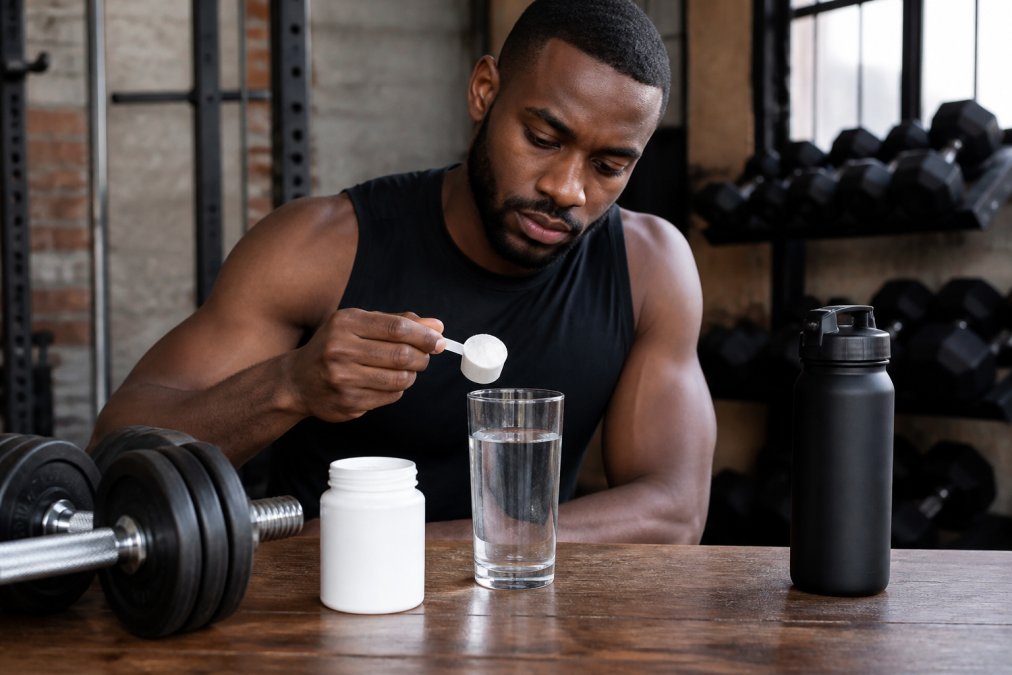
IsaacTempleNutrition offers two creatine solutions designed for athletes who take their physical stewardship seriously.
Conclusion: Building Strength With Purpose
The best clean creatine for daily strength is one you can trust completely. Third-party testing, transparent sourcing, and single-ingredient formulas aren't marketing, they're proof. When you commit to daily creatine supplementation, you're making a long-term investment in your strength and your body's performance.
| Creatine Option | Best For | Daily Dosage | Key Feature |
|---|---|---|---|
| Creatine Monohydrate | Pure strength focus | 1 scoop daily | Single-ingredient, unflavored |
| Creatine Hydration Powder | Intense training + hydration | 1 scoop daily | Electrolyte matrix included |
Frequently Asked Questions
What does 'clean' mean when referring to creatine supplements?
Clean creatine means the supplement is free from heavy metals, artificial dyes, fillers, and contaminants. It contains only creatine monohydrate (or another pure form) without additives that don't serve a performance purpose. Third-party testing verifies purity, and clean labels disclose every ingredient. This matters because impure creatine can expose you to mercury, lead, or cadmium, harmful substances that accumulate in your body over time with daily use.
Is it safe to take creatine every day for strength?
Yes, daily creatine use is safe for most healthy adults when taken at recommended doses (3-5 grams per day). Decades of research support creatine's safety profile. However, daily use requires consistent hydration and clean sourcing to avoid heavy metal exposure. If you have kidney disease or take medications affecting kidney function, consult your doctor first. Most athletes maintain strength gains with continuous daily dosing rather than cycling on and off.
How much creatine should I take daily for optimal strength?
For daily maintenance, take 3-5 grams of creatine monohydrate once per day. If you're starting fresh, a loading phase (20 grams split across four doses daily for 5-7 days) saturates muscles faster, then drop to 3-5 grams daily. Without loading, you'll reach full saturation in 3-4 weeks of consistent daily dosing. Pair daily creatine with adequate water intake (half your body weight in ounces) to support muscle hydration and ATP production.
What are the signs of a low-quality creatine supplement?
Low-quality creatine often contains fillers, artificial sweeteners, or undisclosed ingredients. Red flags include: no third-party testing badge, vague ingredient lists, visible clumping or discoloration, and lack of sourcing transparency. Reputable brands publish lab reports showing heavy metal testing and micronized particle size. If a brand won't share testing data or sourcing information, that's a sign to look elsewhere. Clean creatine should list only creatine monohydrate as the active ingredient.