

Table of Contents
- What You'll Need Before You Start
- How Creatine Monohydrate Works for Muscle Gain
- Creatine Loading Phase Benefits: Is It Worth It?
- Creatine Monohydrate Dosage for Beginners
- Best Time to Take Creatine for Muscle Growth
- Hydration Tips for Creatine Users
- Common Mistakes to Avoid
- Frequently Asked Questions
Last Updated: September 14, 2026
What You'll Need Before You Start
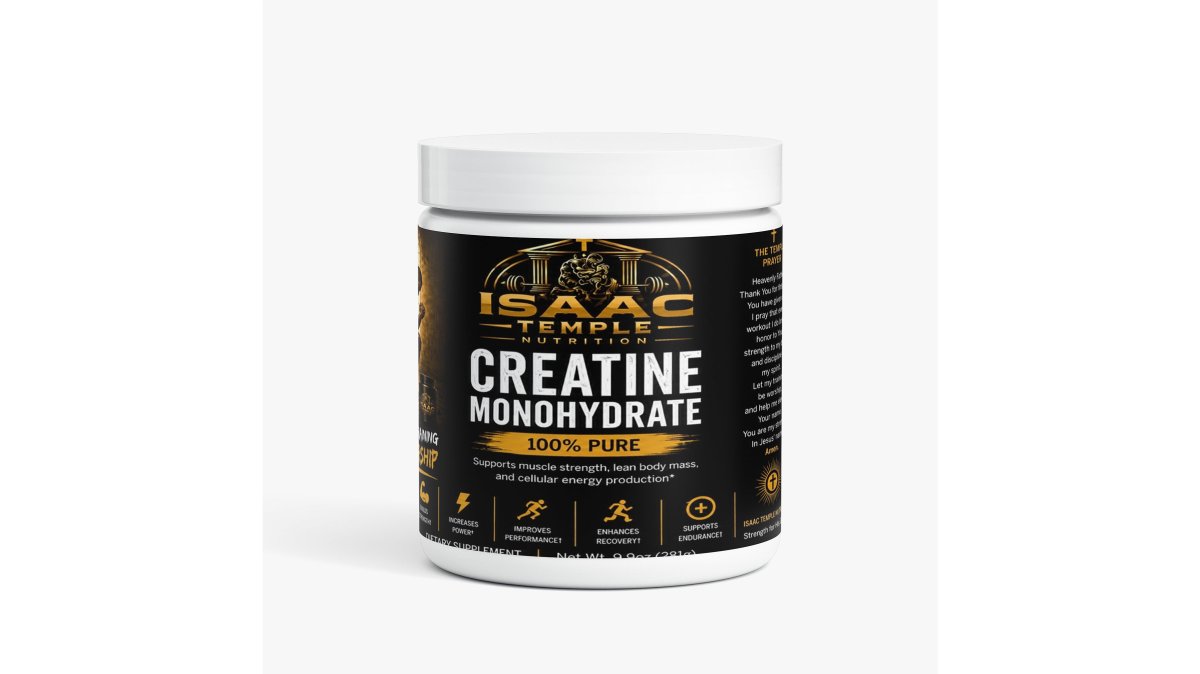
Creatine monohydrate is the most studied sports supplement available, and the research consistently supports its role in strength and muscle gain. At IsaacTempleNutrition, we built our Creatine Monohydrate around that evidence: 100% pure, unflavored, and free of the fillers that dilute so many budget tubs on the market. Before your first scoop, gather a few basics.

- A pure creatine monohydrate powder. Micronized versions dissolve more easily in cold water.
- A shaker bottle or glass. Creatine settles fast, so stir or shake before drinking.
- A kitchen scale or measuring scoop. Precision matters more than most beginners expect.
- A water bottle you'll actually refill. Hydration and creatine work together, as we'll cover below.
You don't need loading phases, cycle charts, or a shelf of supporting products to start. You need one quality tub and a routine you'll repeat.
How Creatine Monohydrate Works for Muscle Gain
Creatine works by raising your muscles' stores of phosphocreatine, which the body uses to regenerate adenosine triphosphate (ATP), the energy currency your muscles burn during short, intense efforts. More ATP on hand means more reps before fatigue, and more quality reps over time means more muscle protein synthesis and growth.
That's the mechanism, and it's why creatine earns its label as an ergogenic aid. It doesn't act like a stimulant or a hormone. It simply gives your muscles a bigger fuel tank for explosive work like sprinting, heavy lifting, and interval training. The NIH Office of Dietary Supplements fact sheet on creatine outlines this same energy pathway in plain terms.
Here's the part most guides get wrong: creatine doesn't build muscle while you sit still. It amplifies the training you already do. Skip the hard sets and the supplement does nothing.
Creatine Loading Phase Benefits: Is It Worth It?
Creatine loading phase benefits come down to speed, not size. Loading means taking a higher daily dose for about a week to saturate your muscles quickly, then dropping to a maintenance dose. Without loading, you reach the same saturation in roughly three to four weeks.
So is it worth it? For most people, yes, if you want results sooner and can tolerate the routine. Skip it if the frequent doses feel disruptive to your day.
| Approach | Daily Intake | Time to Saturation | Best For |
|---|---|---|---|
| Loading phase | Higher dose, split across the day | About 1 week | Athletes with a competition or training block soon |
| No loading | Standard dose once daily | 3-4 weeks | Beginners who want simplicity |
A common mistake is treating the loading phase as mandatory. It isn't. Both paths end at the same place; only the calendar changes.
Creatine Monohydrate Dosage for Beginners
Creatine monohydrate dosage for beginners follows one simple rule: roughly 3 to 5 grams per day, every day, whether you train or not. That's your maintenance dose. If you choose to load, take around 20 grams daily split into four smaller servings for five to seven days, then return to 3 to 5 grams.
How to Scale Your Dose to Your Body Weight
The 3-to-5-gram range isn't arbitrary. A common pattern in the sports-nutrition literature is to dose by body weight: about 0.03 grams per kilogram of body weight per day for maintenance, and about 0.3 grams per kilogram per day during a loading phase. For a 150-pound adult, that works out to roughly 2 grams of maintenance and 20 grams of loading. For a 220-pound adult, it's closer to 3 grams of maintenance and 30 grams of loading. The 3-to-5-gram range most labels print is a convenient middle that fits the majority of adults, but heavier lifters and larger frames can reasonably sit at the top of it.
Loading Math, Step by Step
If you load, the arithmetic is simple. Multiply your body weight in pounds by 0.14 to get your daily loading grams, then divide that total into four equal servings spread across the day. A 180-pound lifter lands at roughly 25 grams per day, or about 6 grams per serving, four times a day. Hold that for five to seven days, then drop to your maintenance dose. Splitting the dose matters: a single 20-gram scoop is more likely to cause loose stools and stomach cramping than four 5-gram servings spaced a few hours apart.
What Your Diet Already Provides
You are not starting from zero. Red meat and fish are the main dietary sources of creatine, and a typical omnivorous diet supplies roughly 1 to 2 grams per day. That baseline is one reason vegetarians and vegans often respond more strongly to supplementation: their muscle stores start lower, so the same dose produces a larger relative jump. If you eat meat regularly, your maintenance dose is topping off a tank that's already partly full. If you don't, you may notice the difference sooner.
The Non-Responder Question
A meaningful share of people, often cited as roughly 20 to 30 percent of users, see little or no strength benefit from creatine even at correct doses. The pattern usually traces back to one of three things: they already had high baseline muscle creatine from a meat-heavy diet, they aren't actually training hard enough to need the extra ATP, or they're inconsistent with daily intake. Before you conclude you're a non-responder, verify three things: that you've taken the full dose daily for at least four weeks, that your training includes genuine high-intensity sets, and that your product is pure creatine monohydrate rather than a blend. If all three check out and nothing changes, you may simply be a low responder, and no dose increase will fix that.
Best Time to Take Creatine for Muscle Growth
The best time to take creatine for muscle growth is the time you'll actually remember. Timing is a distant second to daily consistency. If you want to optimize anyway, take it with a meal or shake containing carbohydrates and protein, since insulin helps shuttle creatine into skeletal muscle.
Many people pair it with their post-workout nutrition for exactly that reason. A scoop of creatine stirred into a post-training shake is convenient and effective.
There's no meaningful advantage to splitting hairs between pre- and post-workout. Pick a slot, anchor it to something you already do, and hold the line.
Why Carbs and Protein Help Absorption
The insulin response from a carbohydrate-containing meal is the mechanism behind the "take it with food" advice. Insulin increases blood flow to skeletal muscle and appears to improve creatine uptake into the muscle cell. A post-workout shake with 30 to 50 grams of carbohydrate and 20 to 40 grams of protein is a practical vehicle. If you train fasted or prefer to take creatine with plain water, that still works. The absorption difference is small enough that consistency will outweigh it over a training block.
Does Caffeine Cancel Out Creatine?
This is one of the most repeated myths in the supplement space, and the short answer is no. Caffeine does not negate creatine's benefits. The confusion traces back to a small body of older research suggesting that combining the two might blunt some performance effects, but the broader evidence does not support a meaningful interference effect at normal doses. What does happen is that both compounds can affect how you feel: caffeine is a stimulant, creatine supports short-burst energy, and stacking them before a heavy session is common and generally well tolerated. If you're sensitive to stimulants, separate them by a few hours simply to keep your sleep and heart rate predictable, not because one cancels the other.
Pre-Workout vs. Post-Workout: What the Mechanism Suggests
If you want a defensible reason to pick one slot over the other, look at the training window. Taking creatine in the hours around a workout means your muscles have elevated creatine availability during the session that most depends on phosphocreatine. Post-workout has the advantage of riding the insulin spike from your recovery meal. Pre-workout has the advantage of being easy to remember. Both end at the same place after a few weeks of daily dosing, because saturation, not timing, is what drives the result.
A Simple Timing Rule
Anchor your dose to a habit you already have. If you make a morning shake, add creatine to it. If you eat dinner at the same time every night, take it then. If you train at 6 p.m. four days a week, take it with your post-training meal on those days and with dinner on the others. The habit stack is the whole strategy. Everything else is optimization at the margins.
Hydration Tips for Creatine Users
Hydration tips for creatine users start with one fact: creatine pulls water into your muscle cells, so your total fluid needs rise slightly. Drink consistently through the day rather than chugging right before training.
- Aim to keep urine pale yellow, not clear and not dark.
- Add an electrolyte source if you train hard or sweat heavily.
- Spread fluids across the day instead of front-loading them.
- Expect a small scale bump in the first weeks. That's cellular hydration, not fat.
That early water retention is normal and often misread as bloating. For most users it fades as the body adjusts. If you'd rather combine steps, IsaacTempleNutrition's Creatine Hydration Powder pairs creatine with a full electrolyte matrix, so hydration and dosing happen in one scoop.

CDC guidance on water and electrolyte needs
Common Mistakes to Avoid
The biggest mistake is inconsistency. Creatine rewards daily intake over months, not sporadic bursts around workouts. A close second is buying on price alone and ending up with a tub full of fillers.
Other frequent missteps:
- Skipping water. Under-drinking while supplementing invites cramps and headaches.
- Expecting overnight results. Strength gains build over weeks of consistent training and dosing.
- Quitting during the loading phase. Mild stomach upset usually passes when you split doses.
- Ignoring label transparency. Look for a single ingredient: creatine monohydrate.
If you're coming from a mainstream brand, the switch is simpler than it looks. One scoop, one habit, no relearning required. IsaacTempleNutrition exists for people who want that same simplicity with ingredients they can trace and a mission they can stand behind.
FDA guidance on dietary supplement labeling
Building muscle is a long obedience in the same direction, and the small daily choices carry the most weight. If you want a creatine you can trust, IsaacTempleNutrition's Creatine Monohydrate is pure, unflavored, and built for steady, disciplined progress. Pair it with our Advanced 100% Whey Protein Isolate for post-workout recovery, or choose the Creatine Hydration Powder if you'd rather cover hydration in the same scoop. Get started with IsaacTempleNutrition and train with intention, one faithful day at a time.

Frequently Asked Questions
What should you never mix creatine with?
Avoid mixing creatine monohydrate with highly acidic juices like orange or grapefruit juice, as acid can degrade creatine into creatinine before you absorb it. Also skip mixing it into hot liquids, which speed up that breakdown. Plain water, milk, or a protein shake are your best options. If you use a creatine hydration powder with electrolytes, just follow the label directions.
Is a loading phase necessary for muscle gain?
A loading phase is not required. Taking 3 to 5 grams of creatine monohydrate daily will saturate your muscles in about 3 to 4 weeks, while a loading phase of 20 grams per day split into four doses gets you there in 5 to 7 days. Both approaches reach the same endpoint. Loading just gets you to the strength and recovery benefits faster if you want them sooner.
How much water should you drink while taking creatine?
Creatine pulls water into your muscle cells, so you need more fluid than usual. Aim for at least 8 to 10 cups of water daily, and add an extra 2 to 3 cups on training days. Spread your intake throughout the day rather than chugging it all at once. Watch for dark urine or persistent headaches as signs you need more.
How should a beginner take creatine for the first time?
Start with 3 to 5 grams of creatine monohydrate daily, mixed into water or a shake. You can skip the loading phase and just take it consistently every day, including rest days. Pair it with a meal or post-workout shake for better absorption. Give it 3 to 4 weeks before judging results, and drink plenty of water throughout the day.